Welcome Message
Dear valued members,
It is a profound honor to host the World Federation of Right to Die Societies
International Conference 2026 in Tokyo.
In August 1976, upon the establishment of the Japan Society for Dying with Dignity, Dr. Tenrei Ohta proposed to right-to-die associations in four countries—Australia, the Netherlands, the United Kingdom, and the United States—that an international conference be convened in Tokyo. This inaugural gathering enabled participants to gain a significantly broader international perspective on end-of-life issues. At that meeting, the “Tokyo Declaration 1976,” comprising the following five principles, was adopted:
- End-of-life care should be determined by the autonomous decision of the individual.
- The “Living Will” expressing an individual’s wishes regarding end-of-life care should be respected as a fundamental human right.
- Efforts shall be undertaken toward the establishment of a legal framework for this purpose.
- An international federation shall be created to facilitate global information exchange.
- Regular international conferences shall be convened to deepen mutual understanding.
For the past five decades, our Society has upheld these principles as our foundational mission and has remained steadfast in advancing these commitments. Over this period, numerous right-to-die organizations have emerged worldwide, and today the World Federation of Right to Die Societies has grown into a major body comprising 63 member organizations across 30 countries.
The upcoming international conference will provide an opportunity to examine the diverse approaches to end-of-life care adopted across different nations. The timing, content, and modalities of end-of-life care vary widely depending on each country’s history, culture, religious traditions, and societal values. Some countries, such as Canada, legally permit medically assisted dying at the end of life. Others, including South Korea, do not allow assisted dying but have enacted laws recognizing palliative care and the withdrawal of life-sustaining treatment in accordance with the individual’s wishes. While these approaches differ, the principle of ensuring a “dignified death based on self-determination” constitutes a universal aspiration shared across borders and represents a fundamental human right. The World Federation of Right to Die Societies has long fostered mutual understanding and information sharing, with the aim of enabling each nation to develop the system most appropriate to its own societal context. It is our sincere hope that this year’s conference will further enrich such exchanges and contribute meaningfully to the enhancement of end-of-life care worldwide.
Within Japan, our Society has continued to advocate for the legalization of the Living Will—reflecting an individual’s explicit wishes in end-of-life care—through extensive public awareness initiatives. Nevertheless, this goal has yet to be realized. Achieving this long-standing aspiration requires open, candid societal discourse on approaches to dying and end-of-life medical practice, grounded in an appreciation of diverse perspectives. We earnestly hope that the forthcoming conference will serve as a constructive and productive platform for such dialogue.
This year marks the 50th anniversary of the Japan Society for Dying with Dignity. On this significant milestone, we wish to underscore—both domestically and internationally—the importance of establishing a legal framework for Living Wills, and to further promote a societal environment in which individuals can contemplate the final stage of life with dignity and autonomy.
Congress Chair
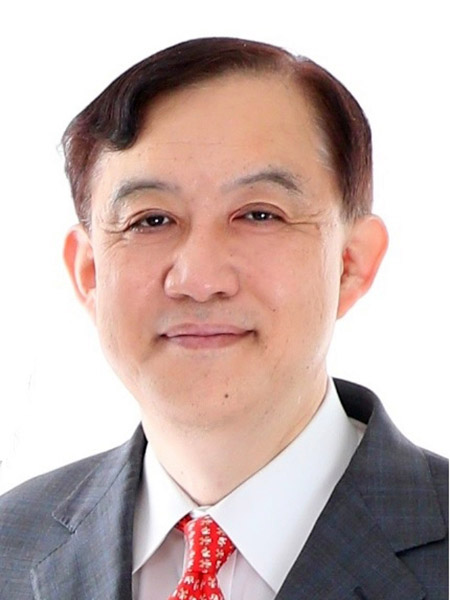
Yoshihiro Kitamura(President of the Japan Society for Dying with Dignity)